archivio

Uncategorized

Group exhibition at Hub-Art Gallery. Curated by Greta Zuccali.

[Text from Hub-Art website] This group exhibition, titled #DISCONNECTED, is born from an open call inviting all the creative minds to explore the various facets of loneliness in the digital age, stimulating reflection and proposing new perspectives. The exhibition takes place during the 10th edition of Barcelona Gallery Weekend. Furthermore, the exhibition is planned to run during the 15th edition of Manifesta, the nomadic art biennial that took place in Barcelona and its metropolitan area in 2024.

It seems like a paradox: the more connected we are, the more alone we feel. Immersed in a flood of notifications, updates, and likes, constantly seeking virtual approval, we find ourselves isolated in a bubble of “techno social” relationships that cannot replace genuine human contact.

Journalist David Riesman already spoke of a “lonely crowd” in 1950. Today, with more than 5.2 billion users connected to social media, this definition seems more relevant than ever.

The artists in the exhibition, using various media such as painting, video art, photography, and installations, take up this concept, analyzing how our hyper connected society has amplified feelings of isolation and loneliness. Artists, like sensitive barometers, reflect our era’s pervasive loneliness. Many works abstract this feeling, using color and gesture to express the indefinable. The human figure often vanishes, swallowed by an intangible atmosphere that mirrors our lives. Photography emerges as a potent tool, capturing the habits of a society silenced and captivated by screens, even willing to sacrifice for them.

Joanna D’Arc, a cellist and vocalist whose music evokes a profound emotional experience, will grace the opening evening. She sings in a variety of languages, including Old Norse and the invented language of Lisa Gerrard. Her performance will be an invitation to join her on a sonic journey, exploring the vastness of human emotion.

Featured Artists

Mariam Belrhlid Aourik, Antonio Bernardo, Arnau Casas, Matteo Cervone, Hannes Egger, Luigi Filograno, Matteo Lencioni, Lillylilla, Simona Muzzi, Emanuela Pecchia

Matteo Lencioni

Born in Italy, he lives and works in Barcelona.

For him images serve as intermediaries between the abstract realm of ideas and the tangible world. They function as tools for exchange, fostering a connection between the artist, the artwork, and the viewer. While rooted in individual creativity, artworks possess the power to evoke emotional responses in audiences who are not directly involved in their creation. This perspective downplays the emphasis on individuality, mysticism, and transcendence often associated with artistic expression, instead focusing on the concrete aesthetic and material qualities of the work itself.

After years of exploration, each of his works represents a new experiment, building upon previous creations while also embodying a fresh concept.

Works

My choice fell on these works because it seemed to me that, given how the “pieces” that compose them are placed, they graphically represented a “disconnection” quite eloquently. These are works that are part of a series called “Contextualización”, behind which there was an idea of ​​the meaning of things with the context in which they are found. Everything makes sense when there are significant reciprocal relationships, while the lack of these makes everything detached, isolated.

2015. Mixed media: cardboard, wood, acrylic paint, marker, 81 x 116 cm

“Tenete a mente che un quadro – prima di essere un cavallo da battaglia, una donna nuda, o un aneddoto qualsiasi – è essenzialmente una superficie piana ricoperta di colori riuniti in un certo ordine”.

Maurice Denis, Arte et Critique, 1890.

Quando parliamo di arte, ci riferiamo a un oggetto, un manufatto al quale associamo un significato e un valore. Pensiamo a un’opera pittorica: è una tela in lino ricoperta da uno strato fine di un impasto fluido colorato. Un dipinto è sostanzialmente questo, un oggetto che non ha utilità e che in sé non è costoso. Se invece prestiamo attenzione solo a ciò che rappresenta, la mente valuta quell’immagine e le conferisce un significato. In determinate circostanze, assegniamo anche un valore economico. La frase di Maurice Denis spiega bene il concetto – e sicuramente anticipa l’arte astratta.

No 14, Mark Rothko, 1960

Approfondiamo l’aspetto materiale di opera e in particolare l’impasto dei colori. La loro composizione, tanto in conformità a un disegno come per combinazione aleatoria, genera l’immagine, il cui significato scaturisce dalla nostra percezione, dal nostro giudizio. Questo processo analitico avviene naturalmente: è un fatto naturale, è la manifestazione dei colori secondo la nostra percezione sensoriale. Altrettanto naturale è la formazione di un pensiero che attribuisce un significato a ciò che stiamo contemplando.

Ma come percepiamo i colori? Questa domanda me ne fa venire in mente altre: ma cosa sono i colori? Sono elementi tangibili o sono un codice inventato da noi?  Il colore è una sensazione visiva, è una caratteristica di un oggetto in un ambiente luminoso.  A livello pratico abbiamo creato dei sistemi di colori che assegnano un nome ed un codice ad ogni colore.

Ho pensato di scrivere un manuale che descrive le principali caratteristiche dei colori. Con anche l’intenzione di fare chiarezza sulla terminologia che è usata nel campo della produzione d’immagini nel senso più ampio – dalla pittura alla stampa.

Sono scettico perché empirico, razionalista, idealista e realista insieme mi sembra troppo.

correnti_epistemologiche

Wikipedia

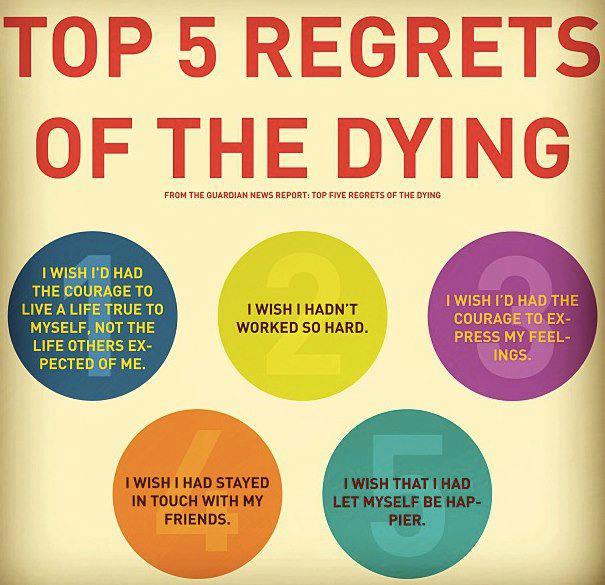
Nurse reveals the top 5 regrets people make on their deathbed | Earth. We are one..

5-regrets-dying

I miei rapporti col cosiddetto “spirito”, ad esempio, sono identici a quelli che col mangiare e col bere. Talvolta non c’è nulla, al mondo, che mi attiri così forte e mi sembri più indispensabile dello spirito, della possibilità di astrarre, della logica, dell’idea. Ma poi, quando ne sono sazio e sento il desiderio e il bisogno del contrario, ogni forma di spirito mi nausea come cibo guasto. So per esperienza che questo modo d’agire viene considerato arbitrario e privo di carattere, anzi addirittura illecito, ma non sono mai riuscito a capire il perché. Come sono costretto, infatti, ad alternare di continuo alimentazione e digiuno, veglia e sonno, così devo anche oscillare di continuo tra natura e spirito, tra empirismo e platonismo, tra ordine e rivoluzione, tra cattolicesimo e spirito protestante. Che un uomo, per tutta la vita, possa venerare sempre lo spirito e disprezzare sempre la natura, essere sempre rivoluzionario e mai conservatore o viceversa, mi sembra, sì, una gran prova di virtù, di carattere e di fermezza, ma mi sembra anche, e non meno, una cosa esiziale, folle e ripugnante, come se uno volesse sempre mangiare o dormire. Eppure tutti i partiti, politici e culturali, religiosi e scientifici, si fondano sul presupposto che un così pazzo atteggiamento sia possibile, sia naturale.

Hermann Hesse, “La cura” (1925)

H. Hesse - La Cura - 1915